

Every winter, building owners and facility managers in southern Indiana look at a roof covered in snow and ice and wonder the same thing: is that a problem? The honest answer is that it depends on weight, not depth, and on how well the roof can shed water when it warms up. Here is how to think about snow load on a flat commercial roof, what the warning signs look like, and when to call a professional.
Snow Depth Is Not Snow Weight
Six inches of fluffy powder and six inches of heavy, wet snow are two very different loads. FEMA’s Snow Load Safety Guide puts 1 foot of fresh snow at anywhere from 3 pounds per square foot for light, dry snow to 21 pounds per square foot for wet, heavy snow. Ice is far heavier: about 57 pounds per square foot for a foot of it, or a little under 5 pounds for every inch.
Weight of 1 foot of snow or ice, in pounds per square foot (psf)
Bars start at zero. One foot of depth on a roof, three very different loads.
Source: FEMA P-957, Snow Load Safety Guide (January 2013), sections 2.2.1 and 2.2.2. FEMA gives 3 psf (light, dry) to 21 psf (wet, heavy) for 1 foot of fresh snow, and about 57 psf for 1 foot of ice (a little under 5 psf per inch).
That is why a thin layer of ice on a roof can matter more than a deep layer of fresh snow. It is also why southern Indiana winters deserve attention. FEMA notes that temperatures swinging above and below freezing create ice, and that rain falling on snow adds load that building codes only partly account for. A mild afternoon followed by a hard freeze is exactly the pattern that turns snow into ice.
So How Much Can Your Roof Actually Hold?
There is no honest one-size-fits-all number. Every commercial building is designed for a specific snow load, and that figure depends on the structure underneath the roof, not just the roofing on top. It is normally listed on the building plans or can be confirmed by a structural engineer. Building codes such as ASCE 7 and the International Building Code (IBC) are where design loads come from, but your own building’s number is the one that matters.
A few things change how much of that capacity you actually have to work with:
- Age and condition. Corroded connections, past water damage or earlier rooftop additions can reduce what the structure can safely carry.
- Drainage. A roof with clear drains, scuppers and downspouts sheds meltwater. A roof with blocked ones holds it.
- Drifting. Wind piles snow into deeper drifts in some spots, which means the load is not even across the roof.
- Weather swings. Rain on snow, or a thaw and refreeze, can add weight quickly.
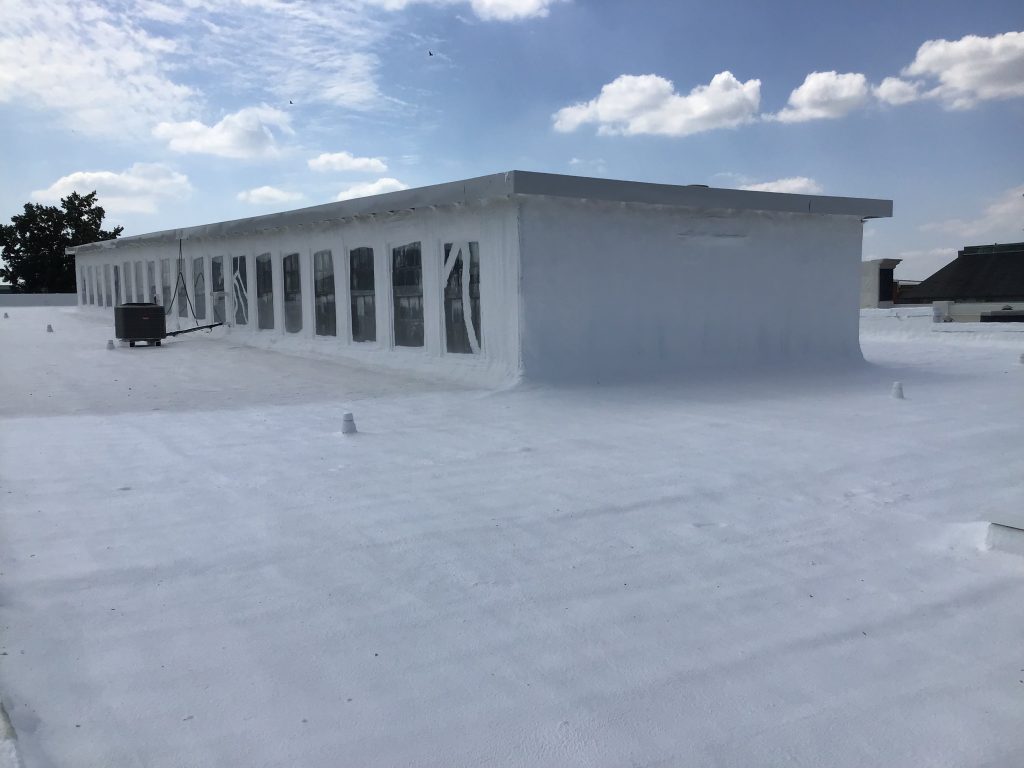
Where Snow Piles Up on a Flat Roof
On a flat or low-slope roof, snow does not slide off. It stays, and the wind moves it around. FEMA lists the most common drift locations: along parapets, wherever the roof changes elevation, and against rooftop equipment such as heating and cooling units, vents and skylights. These spots can carry far more weight than the open field of the roof, and they are also where flashing and seals take the most stress.

Warning Signs of an Overloaded Roof
An overstressed roof usually gives notice before it fails. The signs FEMA lists for wood, metal and steel buildings include:
- Sagging ceiling tiles or boards, or sagging sprinkler lines and sprinkler heads
- Popping, cracking or creaking noises
- Sagging roof members, including metal decking
- Doors or windows that suddenly stick or will not close
- New cracks in walls or masonry
- Severe roof leaks
- Water collecting on the roof in places that are not drains
If you notice any of these during or after a heavy snow, FEMA’s advice is to evacuate the building promptly and call a qualified design professional, such as a Professional Engineer, to inspect the structure. A roofing contractor is not a substitute for that call, but we are glad to look at the roof surface once the building has been cleared.
Drains, Scuppers and Ponding: The Part You Can Control
Most flat-roof snow trouble starts with water that cannot leave. When snow melts between storms and the drains, scuppers or downspouts are clogged, the water ponds in low spots and then freezes, creating concentrated, heavy loads. Ponding also stresses seams and flashing over time, which is how a roof that looked fine in October starts leaking in February.
The fix is boring but effective: clear leaves and debris from drains before the first snow, and check that nothing is blocking the path water takes to leave the roof. This is part of the winter checks covered under commercial roof maintenance, and it connects directly to the problems we describe in Flat Roof Problems Every Indiana Business Should Watch For.
A Simple Pre-Winter Checklist
- Clear all drains, scuppers, gutters and downspouts of leaves and debris.
- Look for ponding stains or standing water spots from earlier storms. They show where water collects.
- Check seams, flashing and seals around rooftop penetrations and equipment.
- Find the building’s design snow load on the plans, and keep a copy where facility staff can find it.
- Have the roof inspected before winter, especially if it has had leaks or repairs in the past.
What to Do After the Snow Melts
Once the roof is clear, walk it, or have it walked, before spring rain. Look for punctures, torn or lifted seams, damaged flashing, crushed drains and any area where water stayed behind. Small problems found in March are cheap to fix. The same problems found after a summer storm are not.
“This company is the greatest, would highly recommend. They have done several buildings for us.”
Iris Hernandez, 5 stars on Google, a commercial customer with several buildings. This review is about Triple W’s overall work, not about snow.
If your roof is a TPO, EPDM or other single-ply system, our team at Triple W Roofing can inspect it for drainage and seam problems, make repairs where needed and tell you honestly what shape it is in. We work on commercial buildings across Montgomery, Jasper, Evansville and Vincennes. Request a free estimate or call (812) 787-2599.
Frequently Asked Questions
How much snow can a flat commercial roof hold?
There is no single number. Each building is designed for its own snow load, and that figure is on the building plans or comes from a structural engineer. It depends on the structure, its age and condition, and how the roof drains. What you can control is how much weight actually reaches the roof, especially ice and water that has nowhere to go.
Is 6 inches of snow too much for a flat roof?
Depth alone does not tell you. FEMA notes that 1 foot of fresh snow can weigh anywhere from 3 psf (light, dry) to 21 psf (wet, heavy), so 6 inches could be about 1.5 psf or about 10 psf. A thaw followed by a freeze, or rain on top of the snow, can add much more.
What are the warning signs that a flat roof is overloaded?
Sagging ceiling tiles or sprinkler lines, popping or cracking sounds, doors and windows that stick, new cracks in walls or masonry, severe leaks, and water collecting in places that are not drains. If you see any of these, FEMA advises evacuating and calling a qualified design professional such as a Professional Engineer.
Should my staff shovel snow off the roof?
Generally no. Roof edges, skylights and wet membrane surfaces make falls a real risk, and metal shovels or ice picks can cut a membrane. If you are worried about load, have a qualified professional assess it rather than sending untrained staff up.
This article is general information, not engineering advice. Roof snow load limits depend on each building’s structure. Confirm your building’s design load with the plans or a licensed structural engineer.